Pilot’s Operating Handbook and References
- Cessna R172K Hawk XP POH (1977)
- Hawk XP N736QC Checklist (Sep 2026 v3)
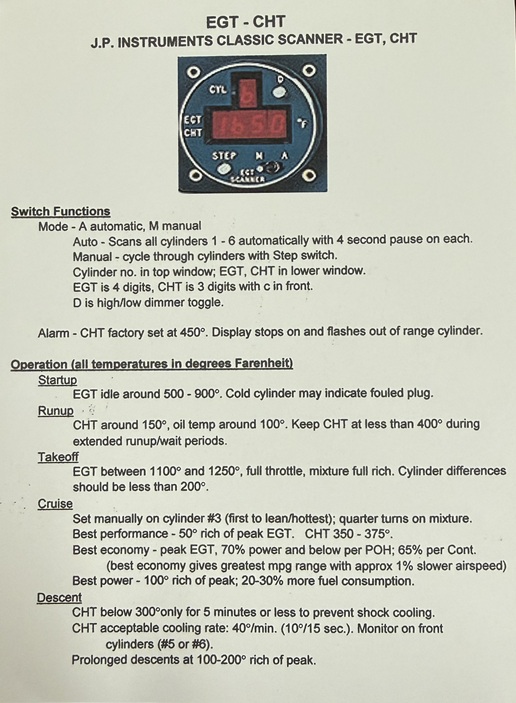
- J.P. Instruments EGT CHT Operating Instructions
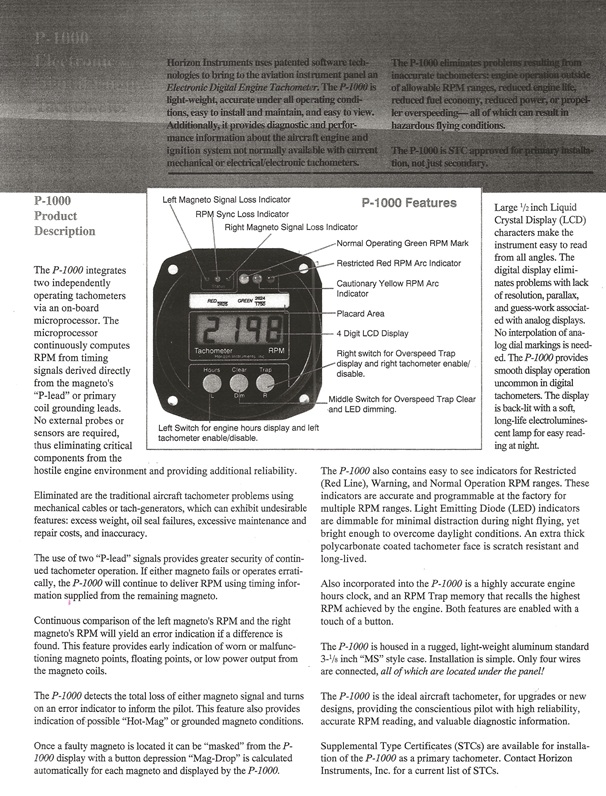
- P-1000 Tachometer Product Description
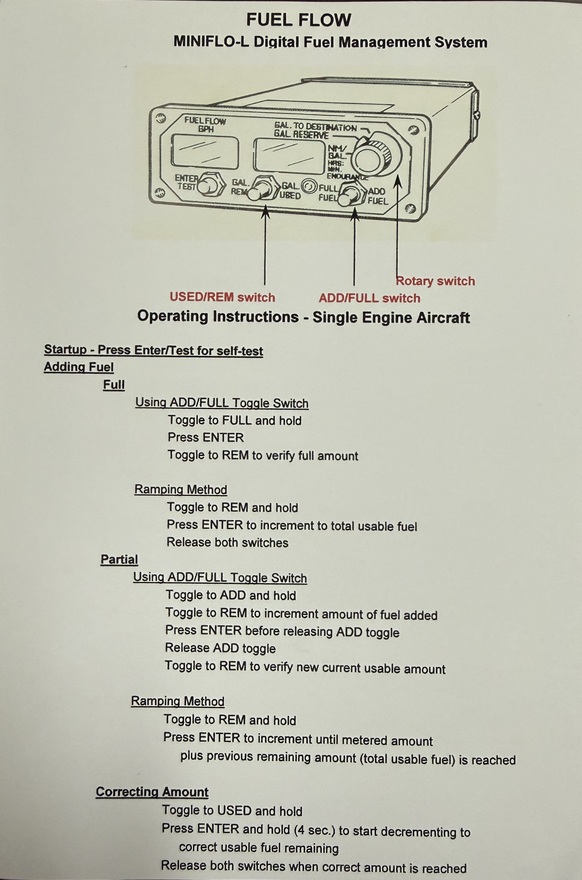
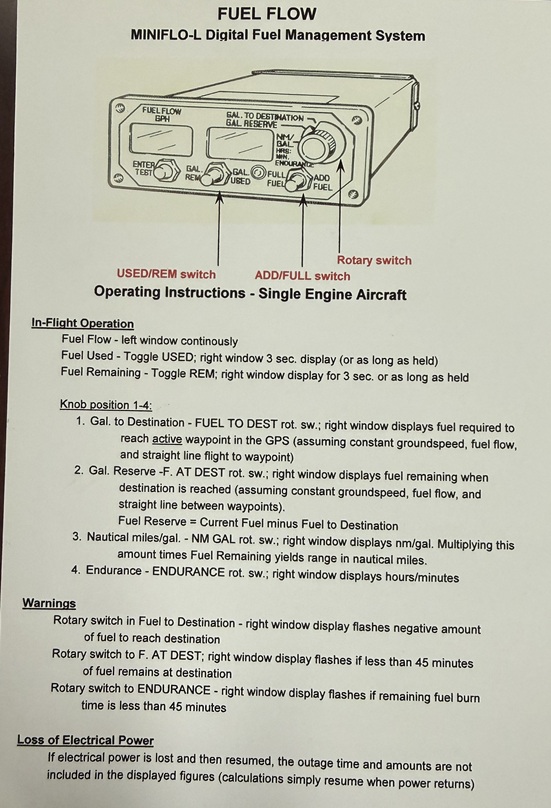
- MINIFLO-L Fuel flow Digital Fuel Management System Operating Instructions
- The instrument operating instructions are available below as images.
Example Weight and Balance Sheet (xls)
Provided as a guide only and may not be correct. Pilots shall refer to the POH to ensure accuracy and latest information.
- N736QC Weight and Balance (Aug 2026)
- When calculating the Weight and Balance for our two Hawks (1KW and 6QC), pilots need to take into account the ballast that is typically kept in Baggage Area 2. Both planes each have 50 pounds of ballast consisting of two white-cloth bags containing 25 pounds of gravel each. The ballast is kept there because Hawks are nose heavy when only the front seat(s) are occupied. Baggage Area 2 is located far behind the rear seats and behind Baggage Area 1. During preflight, pilots should always verify what is stored in the baggage areas.
- If you are taking passengers in the rear seats or stuff for a cross country trip, you might want to remove the ballast. Just place the bags on the hangar floor during your preflight. After flying, please put the bags back in Baggage Area 2.
Cessna Hawk XP Aircraft Test
- Cessna Hawk XP N736QC Aircraft Test (v2 Sep 2026)
Preheat System
The aircraft is equipped with a TANIS engine pre-heat system that makes for easier engine starting and quicker oil lubrication during cooler weather. Use of the pre-heater in our hangar should increase engine longevity. The TANIS system consists of heating elements (1) in each cylinder, (2) on the oil sump, and (3) on the engine crankcase. The TANIS system has a thermostat and is self-regulating. There is nothing to adjust. The preheater is a nice optional piece of equipment that most Cessna’s don’t have in New Mexico.
During preflight inspection, the pilot needs to unplug the extension cord from the 3-prong electrical plug that is accessed via the oil dipstick door. When parking the plane back in our hangar, please plug back in the electrical extension cord. The TANIS pre-heat system will be used until warmer weather returns in the spring per the chief mechanic’s advice.
For cross-country trips, the plane does not need to be “plugged in” unless seriously cold weather is expected.
Instrument Operating Instructions Images
Also available above as PDFs,